Call: 08045801668
 Send Inquiry
 Send Inquiry
Aliphatic Polyisocyanate
Price 460 INR/ Kilograms
MOQ : 50 Kilograms
Aliphatic Polyisocyanate Specification
- Properties
- UV resistance high durability chemical resistance and weather stability
- Smell
- Slight chemical odor
- Shelf Life
- 12 Months
- Molecular Formula
- C27H36N2O10
- Storage
- Other
- Physical Form
- Other
- Structural Formula
- See product datasheet for detailed structure
- Appearance
- Colorless to pale yellow liquid
- Refractive Rate
- 1.487
- Ingredients
- Polyfunctional isocyanate based on hexamethylene diisocyanate
- Purity
- 99% or higher
- Poisonous
- NO
- EINECS No
- 500-060-2
- Grade
- Industrial grade
- Solubility
- Hardly soluble in water soluble in organic solvents
- Density
- 1.18 Gram per cubic centimeter(g/cm3)
- Usage
- Typically employed as a cross-linking agent in two-component coatings for automotive wood industrial and plastic applications
- CAS No
- 28182-81-2
- Taste
- Odorless
- Application
- Other
- Ph Level
- Neutral (approximately 7)
- Melting Point
- Not applicable (liquid form)
- HS Code
- 29291090
- Shape
- other
About Aliphatic Polyisocyanate
Aliphatic Polyisocyanate is an industrial-grade clear liquid compound with a molecular formula of C27H36N2O10 and a molecular weight of 548.59 g/mol. It is a polyfunctional isocyanate based on hexamethylene diisocyanate, with a purity of 99% or higher. This odorless liquid has a slight chemical odor and is highly durable, UV-resistant, and weather-stable. It is commonly used in the production of polyurethane coatings, adhesives, sealants, and elastomers, serving as a cross-linking agent in two-component coatings for automotive, wood, industrial, and plastic applications. With a shelf life of 12 months when stored properly, this colorless to pale yellow liquid is hardly soluble in water but soluble in organic solvents.
FAQs of Aliphatic Polyisocyanate:
Q: What is the molecular formula of Aliphatic Polyisocyanate?
A: The molecular formula of Aliphatic Polyisocyanate is C27H36N2O10.Q: What is the purity of Aliphatic Polyisocyanate?
A: Aliphatic Polyisocyanate has a purity of 99% or higher.Q: What is the recommended storage condition for Aliphatic Polyisocyanate?
A: It is recommended to store Aliphatic Polyisocyanate in a cool, dry, and well-ventilated area away from moisture.Q: In what applications is Aliphatic Polyisocyanate commonly used?
A: Aliphatic Polyisocyanate is commonly used in the production of polyurethane coatings, adhesives, sealants, and elastomers.Q: Is Aliphatic Polyisocyanate a poisonous substance?
A: No, Aliphatic Polyisocyanate is not considered poisonous.
Tell us about your requirement

Price:
Quantity
Select Unit
- 50
- 100
- 200
- 250
- 500
- 1000+
Additional detail
Mobile number
Email

More Products in Chemicals & resin Category
Ammonium Chloride Powder
Price 25 INR / Kilograms
Minimum Order Quantity : 100 Kilograms
Physical Form : Powder
Application : Other , Used in fertilizers metalwork pharmaceuticals and food additives
Properties : White crystalline powder highly soluble in water slightly hygroscopic
Molecular Formula : NH4Cl
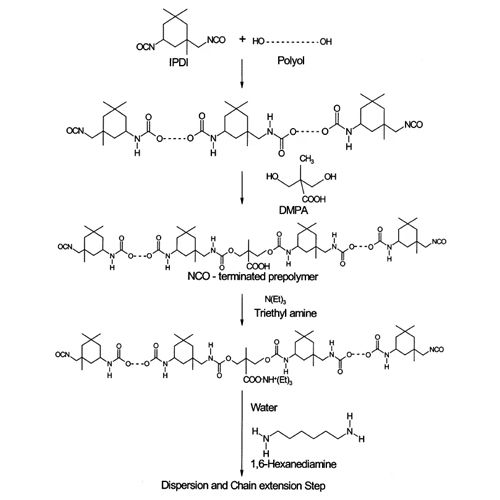
Water Based Polyurethane Dispersion
Price 500 INR / Kilograms
Minimum Order Quantity : 50 Kilograms
Physical Form : Other
Application : Other , Coatings adhesives textiles inks and sealants
Properties : Environmentally friendly excellent filmforming properties good abrasion resistance
Molecular Formula : Variable (dependent on formulation)
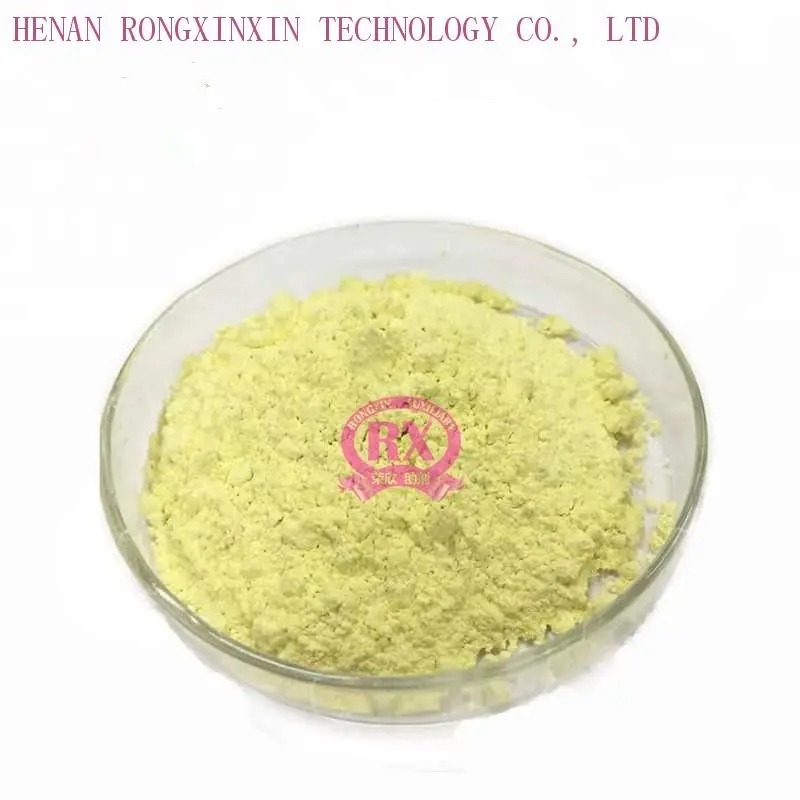
Di-BENZOTHIAZOLE DISULFIDE (MBTS)
Price 250.0 INR / Kilograms
Minimum Order Quantity : 100 Kilograms
Physical Form : Powder
Application : Other
Properties : Your patch testing results indicate that you have a contact allergy to Dibenzothiazyl disulfide (MBTS). It is important that you familiarize yourself with this chemical and take steps to avoid coming in contact with it. What is Dibenzothiazyl disulfide (MBTS) and where is it found? This chemical is an accelerator for natural rubber, synthetic rubber and plastic regeneration. Its usage includes tires, hoses, rubber mats, tarpaulins, unveiled silk goods, wires, cables, and other ‘nonfood’ use of rubber products. Further research may identify additional product or industrial usages of this chemical. What else is Dibenzothiazyl disulfide (MBTS) called? This chemical can be identified by different names, including: 2,2'Benzothiazyl disulfide, Bis(benzothiazolyl) disulfide, Mercaptobenzothiazole disulfide, 2,2'Dibenzothiazoyl disulfide, Benzothiazol2yl disulfide, Naugex MBT, 2Mercaptobenzothiazole disulfide, Dibenzothiazyl disulfide, Pneumax DM, 2,2'MBTS, Dithiobis(benzothiazole), Royal mbts, Altax, Ekagom GS, Thiofide, Accel TM, Mbts rubber accelerator, Vulcafor, Benzothiazyl disulfide, Mercaptobenzthiazyl ether, Vulkacit D
Molecular Formula : C14H8N2S4
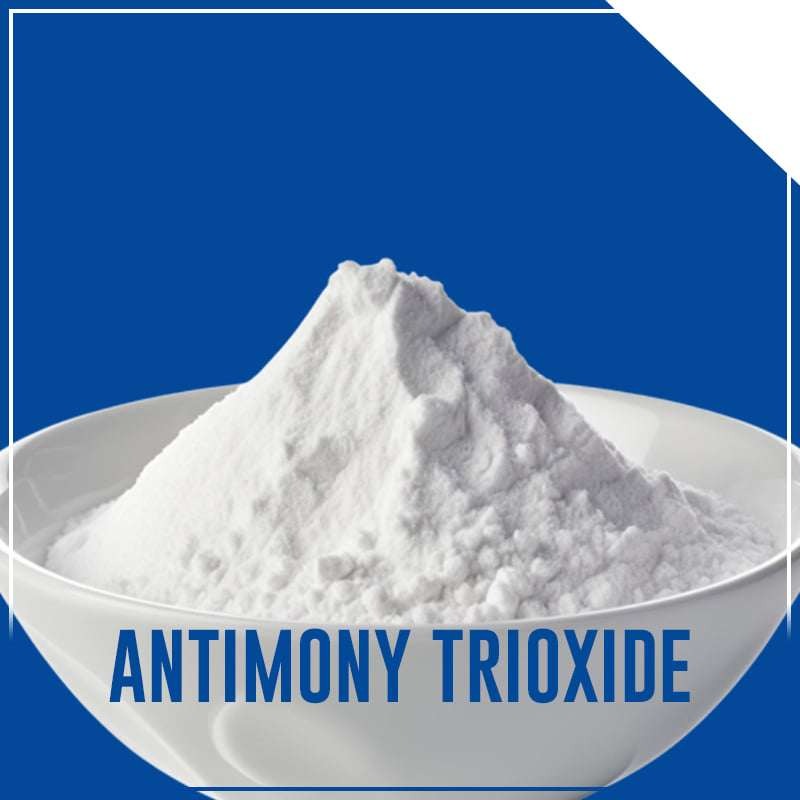
ANTIMONY TRIOXIDE
Price 4000.0 INR / Bag
Minimum Order Quantity : 1 Bag
Physical Form : Powder
Properties : Antimony trioxide (Sb O ) is an inorganic compound that appears as a white crystalline solid and is insoluble in water. It exists in two polymorphic forms: senarmontite (cubic) and valentinite (monoclinic), depending on the synthesis conditions and thermal history. The compound is known for its amphoteric nature, reacting with both strong acids and bases. Antimony trioxide is widely used in the production of flame retardants, particularly in combination with halogenated compounds, and is also utilized in the glass and ceramic industries as a decolorizing agent. It is produced industrially through the oxidation of antimony metal or by calcining antimony sulfide ores. The compound poses significant health hazards, especially when inhaled as dust, and is known to be a carcinogen.
Molecular Formula : SB2O3

Contact Details
COSMOS PLASTICS & CHEMICALS
GST : 27AAAFC0649P1Z8
- 504, Auto Commerce House, 5th Floor, Kennedy Bridge, Nana Chowk,Mumbai - 400007, Maharashtra, India
- Phone :08045801668
 Send Inquiry
Developed and Managed by Infocom Network Private Limited.
